
Women Innovators Conference 2026 in Minneapolis, Minnesota
This is my recap of the Women Innovators Conference 2026, which took place on November 4 at the McNamara Alumni Center at the University of Minnesota in Minneapolis (presented by MIN-Corps and WE* by the Gary S. Holmes Center for Entrepreneurship). I went to the keynote, the Should I Build It? workshop and the How Do I Build It? panel. I deliberately left out the AI panel, because I do that work every day, so I was seeking a different perspective.
The Women Innovators Conference is one of my favorite local events, and I look forward to it because it brings all kinds of builders together. PhDs pursuing research, recent college graduates, multimillion-dollar executives and bootstrapped startups all come together. What a luxury it is to be part the Minnesota Innovation Ecosystem where these meetups are even possible. I've written before about how Minnesota leads in university startups, and this conference is one place you can meet the extended network of people behind that work.
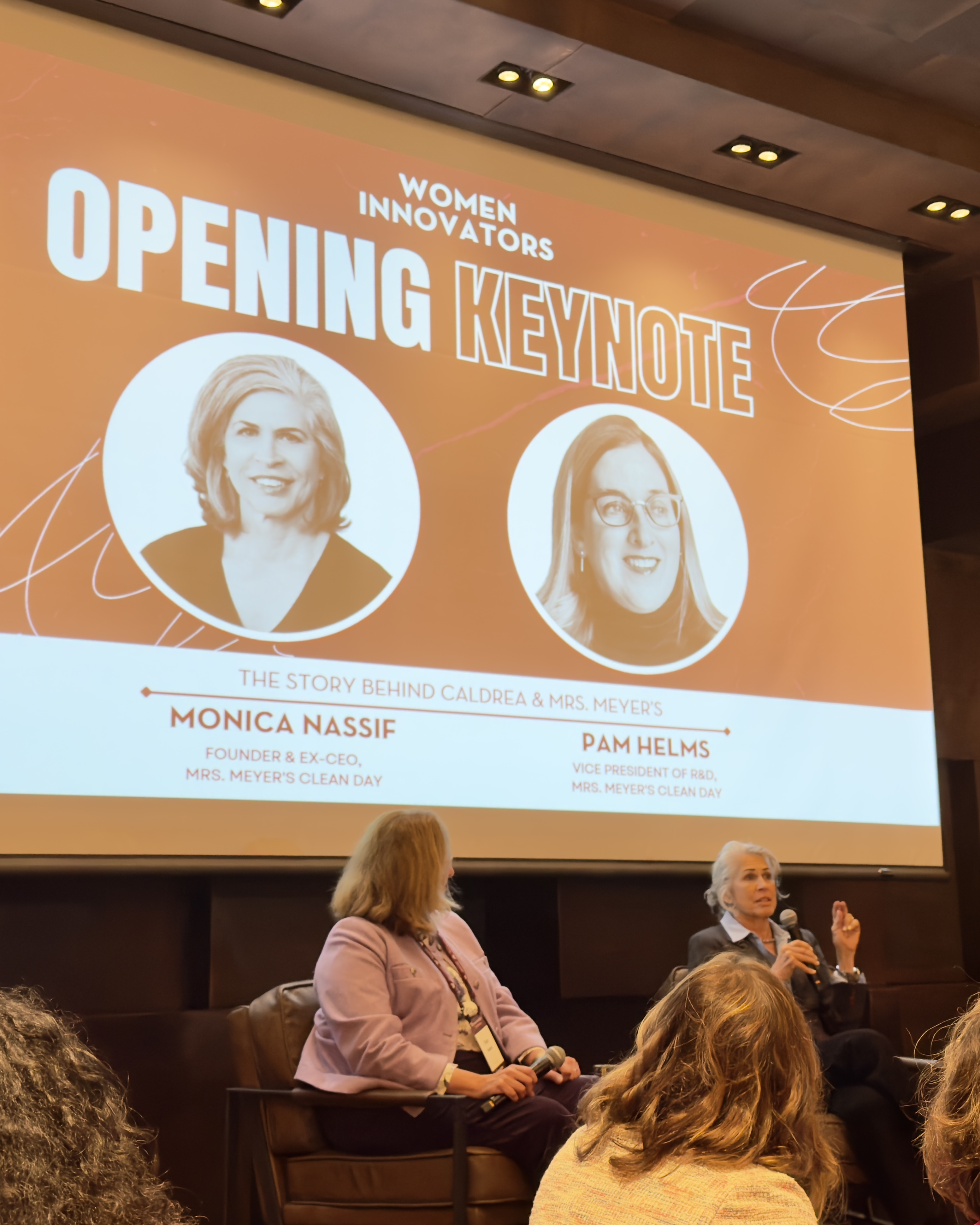
The keynote from Monica Nassif and Pam Helms of Mrs. Meyer’s Clean Day
Monica Nassif founded Mrs. Meyer's Clean Day and wrote I Bottled My Mother. Pam Helms, led research and development for the brand. I loved that they shared how their science and business collaboration worked together in their startup. When you trust your partner, whether that's the CEO or the head of R&D, you get shit done.
Have you seen Grace and Frankie? Monica was giving major Jane Fonda. In the show, Grace Hanson founds Say Grace, a high end beauty company, and hands it to her sharp and ambitious daughter Brianna when she retires. I haven't read Monica's book yet, but from what she shared about her mother and how the brand carries her name, it felt warmly connected to a show with two badass women in the spotlight.
I liked how grounded Pam was about shelf-life, scents and being connected to the customer. As a buyer, I tend to romanticize these things. Her work is to grasp the science so the product lasts on the shelf, smells right, and works well. It was a refreshing (get it?) point of view for an innovation keynote, because she talked about it as a job she had to get done. I sometimes lose sight of that as I am pursuing my dreams. What’s the practical day-to-day implication of what I’m building? Not just the hopes and dreams of my customers.
The Should I Build It? workshop and the Real, Win, Worth worksheet
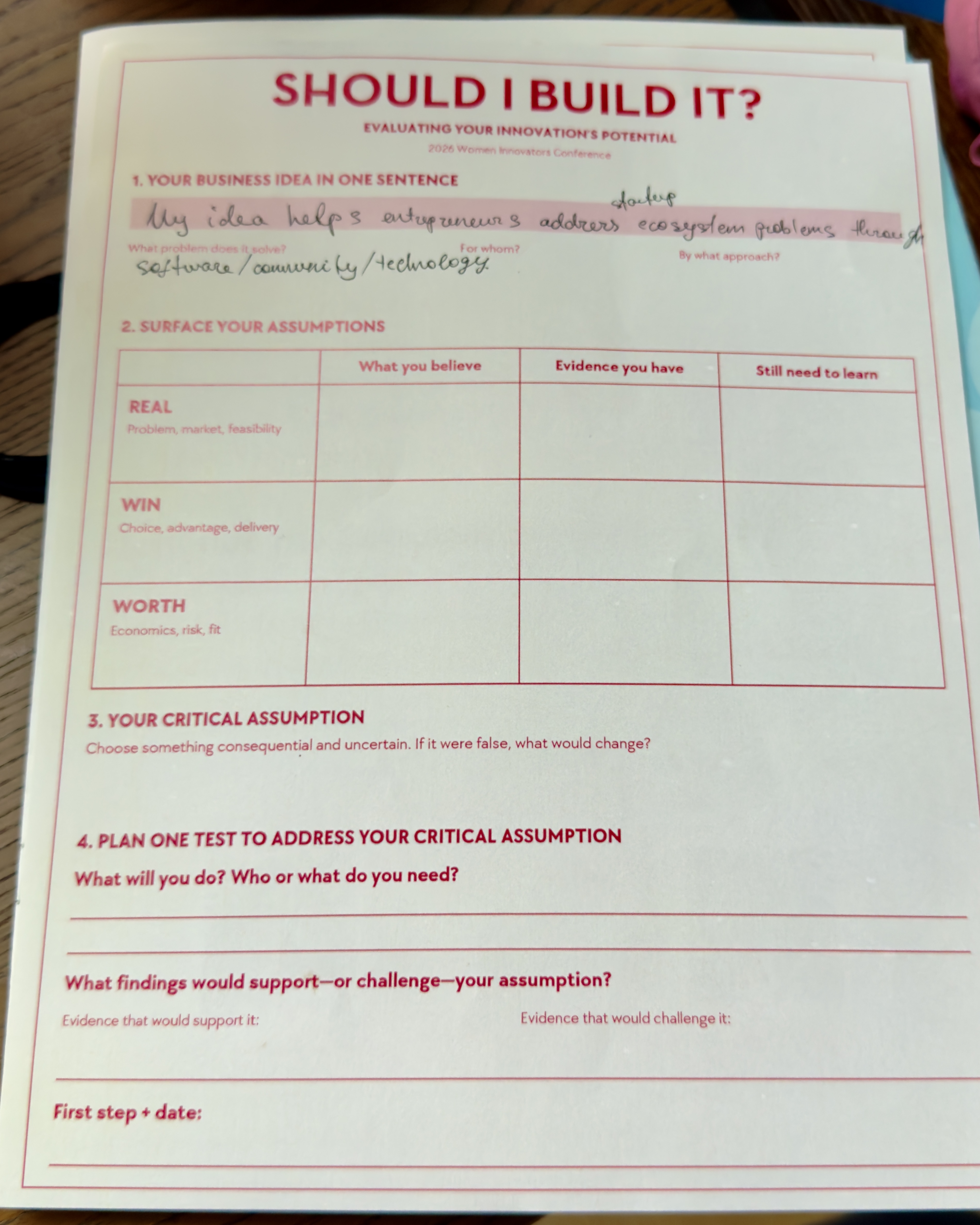
I also went to the Should I Build It? workshop with Morgan Kerfeld, founder of Telo Design and Associate Director of the Holmes Center for Entrepreneurship. This is a great approach to brainstorming new ideas. I recognized it from my Management of Technology M.S. at the University of Minnesota. The worksheet she shared asks whether your idea is real, whether you can win and whether it's worth doing. This is the Real, Win, Worth screen by George Day (HBR 2007).
The worksheet takes a business idea and breaks it down until you have one assumption to test.
How to do the Real, Win, Worth exercise at home
You can do this yourself with a piece of paper.
- Write your idea in one sentence. Say what problem it solves, who it's for and how you'll solve it.
- List your assumptions in a table. Make three rows called Real, Win and Worth, and three columns called what you believe, the evidence you have and what you still need to learn.
- Real covers the problem, the market and whether the idea is feasible.
- Win covers why people would choose you, your advantage and whether you can deliver.
- Worth covers the economics, the risk and whether the idea fits you.
- Choose your critical assumption. Pick something that is both consequential and uncertain, and ask yourself what would change if it were false.
- Plan one test for that assumption. Write down what you will do and who or what you need. Then write down what evidence would support your assumption and what evidence would challenge it.
- Write your first step and a date.
The How Do I Build It? panel with 3M, Octin Health, Oasis Health Partners and Momease
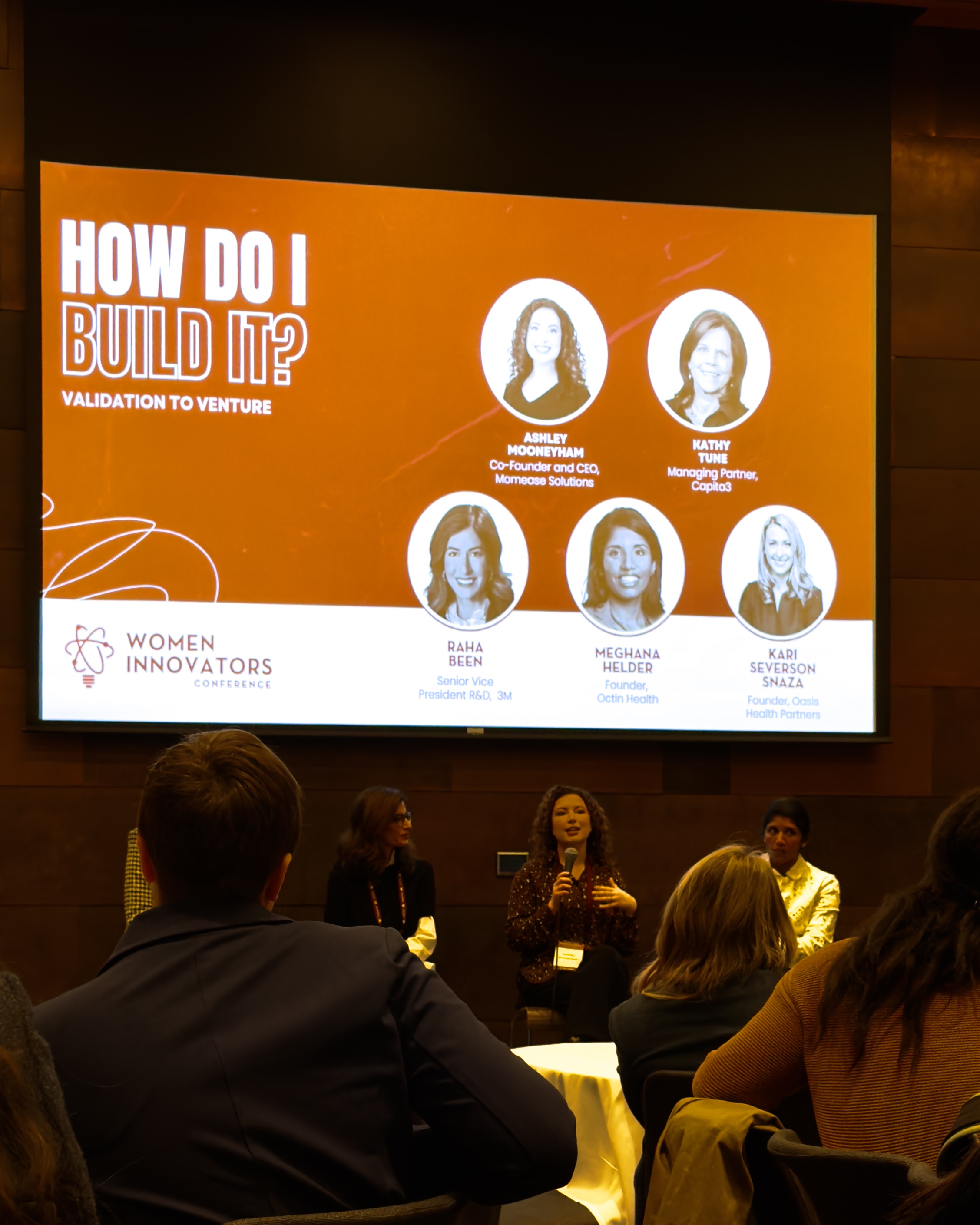
Kathy Tune of Capita3 moderated this panel.
Dr. Raha Been of 3M
Raha Been is Senior Vice President of Research and Development, Strategic Development and Commercialization for the Consumer Business Group at 3M. It was interesting to see 3M in the context of this panel because they have unlimited resources. A startup asks how to build something, and 3M's question is what to build next. I interviewed a 3M legend Art Fry, the inventor of the Post-it Note about startups and entrepreneurship before, and he said: “If you’re going to build something big, you’re going to need a lot of help”. And Dr. Been touched upon sourcing talent as well. She said to hire for “skill and will”.
DR. MEGHANA HELDER OF OCTIN HEALTH
Meghana Helder is a Mayo Clinic trained cardiovascular surgeon and the founder of Octin Health. Octin is developing the Elika Device, which lets surgeons do complex aortic arch procedures without deep cooling of the patient's body. Octin won the 2026 MN Cup Grand Prize. It was great seeing Meghana again and hearing more about her entrepreneurial path. It's not all fun and games and winning championships, and the grind doesn't stop as long as you keep going.
Kari Severson Snaza of Oasis Health Partners
Kari Severson Snaza is from Minnesota and comes from an entrepreneurial family. She studied at the Carlson School of Management, spent 15 years at UnitedHealth Group and served as chief strategy officer at Mayo Clinic. She cofounded Oasis Health Partners, a primary care company for seniors in rural America, and she is now its CEO. Oasis started in South Carolina and has expanded into North Carolina. I'm so happy she said that they fell into the trap of hiring people from large organizations who imagined a glamorous startup lifestyle, and it burned them. Most often people used to corporate structures, don't thrive in this environment. She also shared her expereicne of hiring junior professionals for important jobs. Sometimes you need to hire the experienced person who can do what needs doing without oversight. After years in startups, this resonates with me a lot.
Dr. Ashley Mooneyham of Momease
Ashley Mooneyham is a PhD trained biomedical scientist who became an entrepreneur. She is cofounder and CEO of Momease Solutions, which won the MN Cup grand prize in 2024. Momease started with a heated pumping bra, and when federal funding for its clinical trial was put on hold, Ashley moved the company to a product called PetalSoft. She kept the breast pump that people already use and made an uncomfortable product more comfortable with an accessory, a soft flange. You can buy it directly on the Momease website, and it works with many breast pumps. Her company is very interesting to me as an example of new product development. It's beautiful to see these kinds of mixes happen right here in Minnesota.
References
- University of Minnesota. "Women Innovators Conference 2026" speakers and schedule. sites.google.com
- Carlson School of Management. "Octin Health wins MN Cup Grand Prize." carlsonschool.umn.edu
- Twin Cities Business. "Breast Pump Enhancing Bra Wins Top MN Cup Prize." tcbmag.com
- Star Tribune. "MN startup pivots to save business, launching new product for nursing moms." April 24, 2026. startribune.com
- Becker's Hospital Review. "Healthcare executives launch care company to combat rural health disparities." beckershospitalreview.com
- Momease. "PetalSoft Flange." mymomease.com
- George S. Day. "Is It Real? Can We Win? Is It Worth Doing? Managing Risk and Reward in an Innovation Portfolio." Harvard Business Review, December 2007. hbr.org
- U.S. Anesthesia Partners. "Kari Severson Snaza." usap.com